The best way to beat the heat on your timber floors is to control light and moisture each day and keep a healthy finish on the boards. A worn finish is what lets summer do real damage. An Ipswich summer brings heat, high humidity and strong UV, and all three make boards move, fade and wear faster.
Picture a Queenslander in Booval on a sticky January afternoon. The owner rolls back a rug and finds a pale square sitting in a strip of faded, scuffed boards. That floor has stood for a hundred years, and one hard summer showed every weak spot.
Humidity swings make boards swell and shrink, so they gap or lift. UV light fades the timber and leaves uneven patches near windows. Grit from outside acts like sandpaper and wears the finish thin.
Older Ipswich homes such as Queenslanders and workers cottages carry floors with real character worth protecting. You will learn when simple care is enough and when sanding is the better start. Local tradesperson John can help on 0407 014 883 if you want a second look.
A quick check tells you a lot. If water no longer beads on your boards and soaks straight in, the finish has worn through. Your floor then needs attention before summer gets worse.
Key Takeaways
- Daily light and moisture control protects boards more than any product.
- Small summer gaps are normal and close again in cooler months.
- Never use a steam mop on timber.
- A recoat suits a dull but unbroken finish; deep damage needs a full sand and polish.
- Non-yellowing water-based finishes keep pale timber pale in sunny rooms.
- Check your floor sander holds a current QBCC licence.
How Summer Heat and Humidity Change Timber Floors
A floor that looked tight in winter can show hairline gaps by January, and that movement is the timber responding to the air around it. Timber takes on and releases moisture with the humidity. Boards swell in humid weather and shrink in dry heat.
Once you know this, timber floors become easy to read. Each mark tells you whether the cause is the air, the sun or something under the house.
Gapping and Cupping as Boards Move
Gapping is the thin line that opens between boards in dry spells. These small seasonal gaps are normal, and they close again as the air gets damper. A floor that gaps a little each year is simply breathing.
Never fill seasonal gaps with rigid filler in summer. When the boards swell again, the filler cracks and pops out.
Cupping is a different problem. It shows when board edges rise higher than the centre, usually after moisture builds up underneath. Unlike gapping, cupping does not settle by itself when the weather changes.
UV Fading and Finish Wear Near Windows
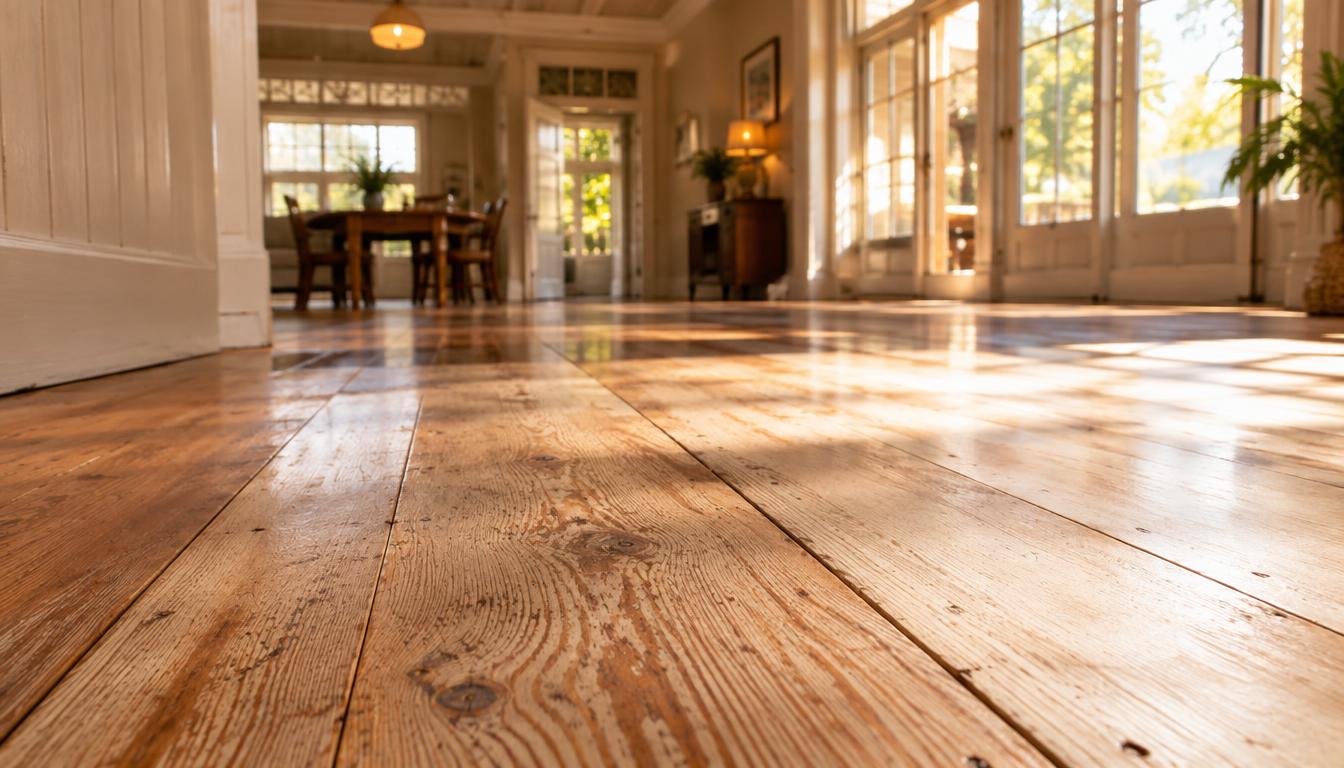
Sun through north and west windows fades a strip of floor and wears the finish thinner there first. UV light fades and darkens timber unevenly. It leaves clear outlines where rugs and furniture once sat.
Hoop pine is a common board in older Ipswich homes. It is soft enough to mark easily, so thin finish near a window lets scratches reach the timber fast. Those bright strips often hold the most wear on the whole floor.
Wood floor sanding in Ipswich often starts with these sun-faded and moisture-marked sections in older homes. Years of exposure show most where light and water hit hardest. A sander will look at those patches first to judge how deep the damage goes.
You can test for hidden moisture yourself. Press a coin on a raised board edge. If the edge sits proud of the centre after a dry fortnight, the moisture problem is underneath and needs checking before any sanding.
Daily and Weekly Summer Care for Your Timber Floor
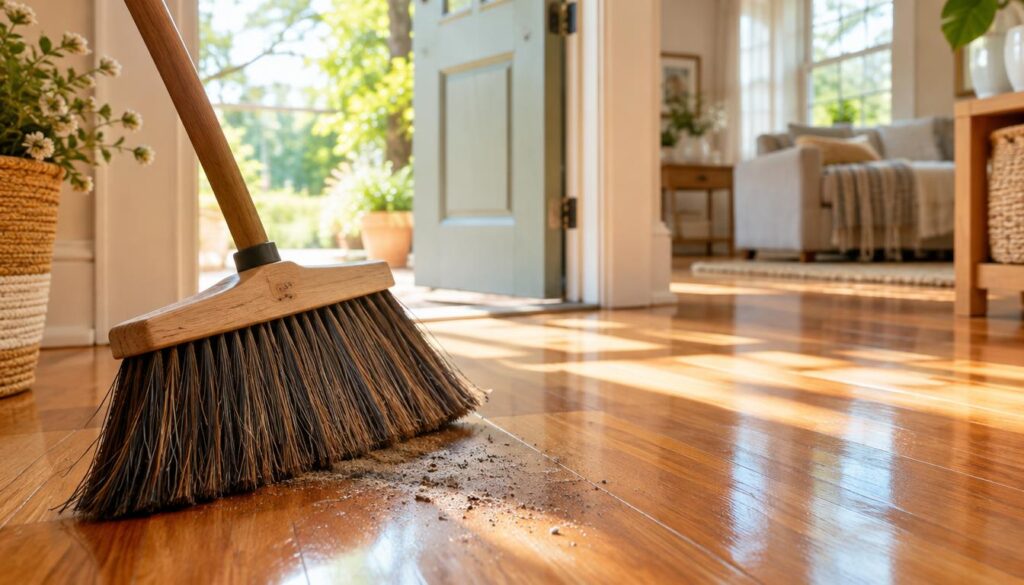
Two minutes with a soft broom each morning does more for a summer floor than any polish you can buy. Grit tracked in from outside acts like sandpaper on a finish. Removing it daily stops most scratches before they start.
A simple routine keeps your timber floor in shape through the hot months. The jobs below take little time, and each one targets a summer risk.
| Task | How often | Why it matters in summer |
|---|---|---|
| Dry sweep or vacuum with a soft head | Daily in high-traffic areas | Removes grit that scratches the finish |
| Damp mop with a pH-neutral timber cleaner | Weekly | Lifts sweat and sunscreen residue without soaking boards |
| Close blinds or curtains in peak sun | Daily from late morning | Slows UV fading |
| Felt pads under furniture | Check monthly | Stops dents and scratches on softer timbers |
| Door mats inside and out | Shake weekly | Traps sand at entry points |
The mop matters more than most people think. A barely damp mop is safe for coated timber, but a wet mop is not. Wring it until it feels almost dry to the touch.
One mistake causes a lot of damage. A steam mop drives moisture into the joins of timber flooring and lifts the finish. It can ruin a sound coat in a single season.
Outdoor timber needs its own plan. Verandahs and decks take the full sun, so they need recoating far more often than indoor floors. A regular recoat keeps their finish lasting through the harsh months.
Your cooling habits affect the floors too. Run the air conditioner or ceiling fans steadily rather than in short blasts. Sudden humidity swings are what make boards move most.
Floor Sanding Ipswich: Recoat or Full Sand and Polish
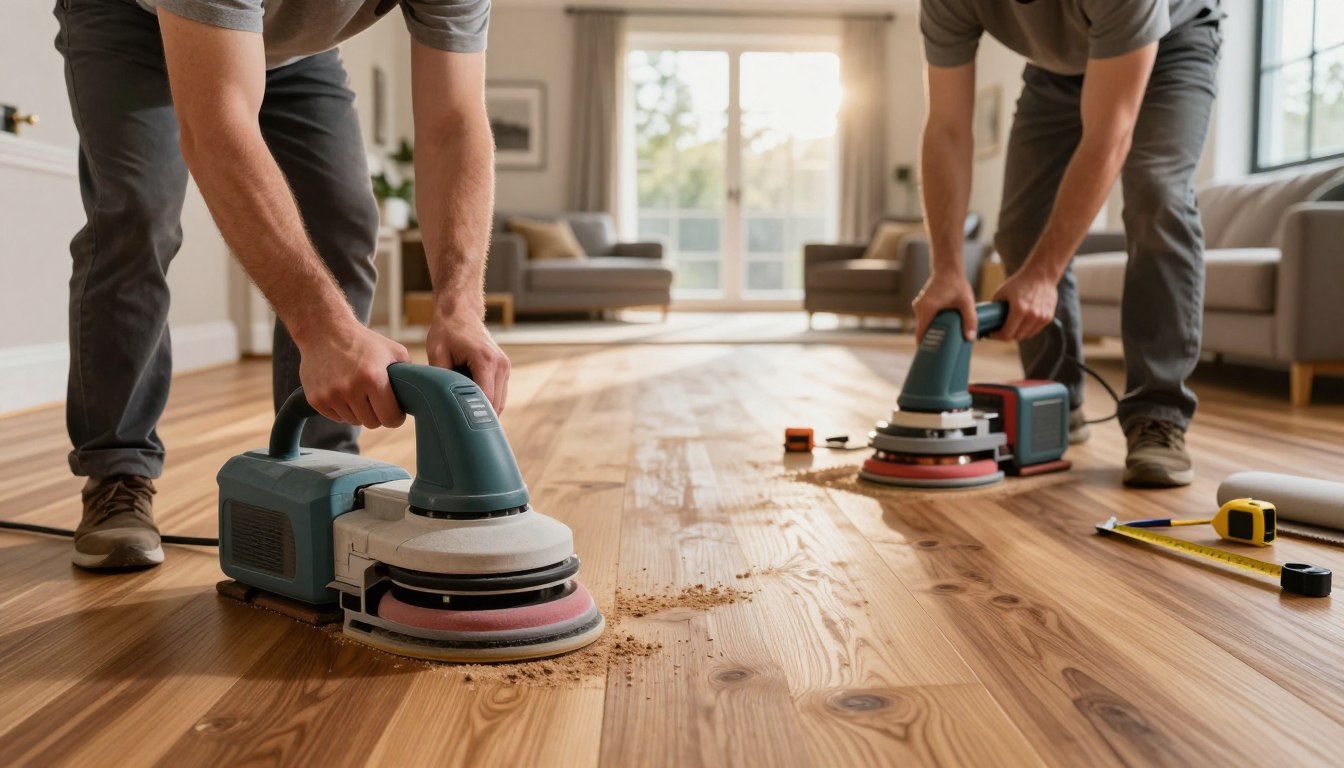
If your finish is dull but still unbroken, a recoat restores it in a fraction of the time of a full sand and polish. A recoat cleans and lightly sands the existing finish, then applies fresh clear coats without taking the boards back to bare timber. It removes scratches and minor damage on the surface.
Floor sanding goes deeper and suits floors where the finish has failed. The right choice depends on what you see when you look closely at the boards.
When a Recoat Is Enough
A recoat suits a floor that looks dull, has light scratches and still has its finish intact. The boards should show no grey patches or bare timber. If the water still beads in most places, a recoat is likely enough.
Pre-coated timber follows set steps. The sander cleans the floor, then runs a small-area adhesion test to check the new coat will stick. Next comes sanding with 180-240 grit sandpaper in the direction of the grain.
When Your Floor Needs a Full Sand and Polish
A full sand and polish is the answer for grey or bare patches, deep scratches and paint on the boards. It also suits floors with old adhesive or staples from carpet and lino. Cupping that has settled after a moisture fix needs a full sand to flatten the boards.
The full sand removes old coatings, paint and grime. Nails are then punched and holes puttied before the new finish goes on. Timber floor sanding in Ipswich often uncovers hoop pine that comes up well with its character intact.
Fresh timber can carry many looks, and current warm timber flooring trends in Ipswich homes favour rich, natural tones. One floor type cannot join in. Laminate floor sanding in Ipswich is not possible, because laminate has a printed photo layer, not solid timber, so worn laminate gets replaced.
How Long the Job Takes and How to Prepare
Standard floors usually take 2-3 days to complete, depending on drying time. Day one covers sanding and repairs. A high-solids primer dries in about 20-30 minutes, then the coats begin.
Each polyurethane coat takes about 12-48 hours to dry. The final coat needs about 24 hours. Rooms need a few more days after that before normal use.
You can save time on the day with some simple prep:
- Move all furniture out of the rooms.
- Remove and dispose of old floor coverings.
- Pull out nails and staples left behind.
- Leave puttying and repairs to the sander.
Floor sanding and polishing near you is best handled by a local Ipswich operator with years experience. An inspection in person shows what your boards need. That experience matters with old timber, which hides surprises under carpet.
Timing helps the sanding polishing job finish on schedule. Book summer sanding for a stretch of milder days. High humidity slows coats drying and can push a 2-day job out by a day or more.
Choosing a Finish That Handles Summer Sun
For a sun-filled Ipswich room, a non-yellowing water-based polyurethane is the safest pick because it keeps pale timber pale. Polyurethane is a tough plastic coating that sets hard over the boards. The quality of that finish decides how well the floor stands up to UV.
Light timbers like hoop pine can amber in sunny rooms under the wrong coat. A UV-stable finish stops that change. Your floor polishing choice should start with the light each room gets.
Four finishes cover most Ipswich homes:
- Water-based single-pack, such as Cabot’s CFP Floor Water Based.
- Two-pack water-based, such as Bona Traffic HD, for high-traffic areas.
- Oil-based polyurethane, for a warmer amber tone that deepens over time.
- Hard wax oil, for a natural look that needs more upkeep.
Cabot’s CFP Floor Water Based is a clear, non-yellowing, fast-drying coating for interior timber, parquetry, cork and engineered flooring. It covers 16 m2/L and goes on in 3 coats. It needs 3 hours between coats.
Bona Traffic HD is a two-component, 100% polyurethane water-based finish. It is non-yellowing and unaffected by UV light, and comes in satin, matt and extra matt sheens. It covers 8-10 m2/Lt with 2-3 hours drying between coats.
In a sunny room, choose a non-yellowing, UV-stable finish. An ambering coat will turn pale hoop pine orange within a few summers.
Sheen changes how a floor looks day to day. Options range from high gloss to satin and matt. Matt and satin hide summer dust and scratches far better than high gloss.
Low-VOC water-based options are also available. VOCs are fumes released as a coat dries, so low-VOC products smell less. That helps if you stay home during the polishing.
Floor sanding and polishing cost per square metre depends on the floor area, timber condition, handwork in corners and stairs, and the finish chosen. Bigger areas spread the setup cost, while damage and stairs add hours. A written quote after an inspection is the accurate figure for your floor sanding work.
A floor can be stained before the clear coats go on. Ask whether a stain goes on first, since a stain cannot be added once the top coats are down.
Conclusion
A summer floor stays good when the finish is intact, so the water-bead test tells you most of what you need to know. Daily light and moisture control does most of the work. A sound finish does the rest.
When the test fails, get the timing right. Coats dry best before the hottest, stickiest weeks arrive. Waiting until February often means slower drying and longer days off your floors.
Choose your sanding services provider with care. Check that any floor sander holds a current QBCC licence for the work. The licence comes from the Queensland Building and Construction Commission and protects you if a job goes wrong.
John brings local know-how to older Ipswich boards, from hoop pine to worn finishes near sunny windows. He can tell you on the spot whether a recoat or a full sand and polish suits your home. Call John on 0407 014 883 to arrange an inspection and a written quote while the weather still suits drying coats.